Should You Upgrade from Hisense U6N Which Mini Led Tv Is Best to Tcl Qm6K?
Short answer: It depends on what the buyer values most. Both the Hisense U6N (a mini‑LED model in Hisense’s U6 line) and the TCL QM6K target buyers who want strong picture performance at accessible price points, but they prioritize different balances of brightness, contrast, smart features, and value. This article compares the two across real‑world use cases — movies, gaming, sports, and everyday TV — and offers a buying guide to help owners decide whether an upgrade to the TCL QM6K makes sense.
Introduction
The midrange TV market has matured rapidly: features that used to be flagship‑only — mini‑LED backlighting, aggressive local dimming, high peak brightness, and advanced gaming features — are now available across multiple brands and series. That makes the upgrade question less binary. A household with a Hisense U6N may wonder if a TCL QM6K will bring noticeably better picture quality, reduced blooming, improved gaming responsiveness, or a smarter platform.
This comparison focuses on practical outcomes that buyers care about: contrast and HDR impact in movies, motion handling for sports, input lag and features for gaming, smart TV usability, and value for the money. It intentionally emphasizes real‑world scenarios rather than raw marketing specs so readers can match a TV to their living room and viewing habits.
Product overviews and positioning
Hisense U6N (mini‑LED variant)
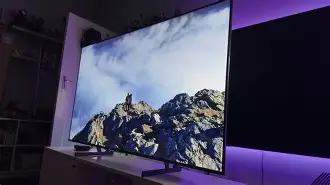
The Hisense U6N represents Hisense’s approach to delivering high‑contrast, bright images at competitive prices. Where the U6N is equipped with mini‑LED local dimming, it aims for deep blacks and high peak highlights without the premium price typical of top‑tier sets. Buyers often choose the U6N for living rooms with mixed lighting because its brightness and aggressive local dimming can make HDR content pop while still preserving dark scene detail.
TCL QM6K
The TCL QM6K aims to compete aggressively in the same midrange bracket. TCL’s strengths typically include user‑friendly smart platforms, careful tuning for natural out‑of‑box color, and good value in terms of panel performance per dollar. The QM6K targets viewers who want a balanced TV that performs well across streaming, gaming, and live sports without needing expensive calibration or add‑on audio systems immediately.
Detailed analysis: picture quality and display technologies
Display performance breaks down into several measurable and perceptual areas: contrast (black level), bloom control (local dimming performance), peak brightness (HDR impact), color accuracy and gamut, viewing angles, and uniformity. These factors determine how images look in movies, games, and sports.
Contrast and black level
Mini‑LED backlighting coupled with local dimming is targeted at improving contrast by creating smaller zones of illumination behind the panel. In practical terms, a well‑implemented mini‑LED system on the Hisense U6N reduces the amount of light that bleeds from bright objects into dark backgrounds, producing darker blacks and stronger perceived contrast for cinematic content.
The TCL QM6K typically competes by optimizing its dimming algorithm and panel behavior. In rooms where absolute black and halo control are critical (e.g., dedicated home theater spaces), small differences in dimming precision and zone count can be noticeable. For most living rooms, both models deliver satisfying contrast, but the edge goes to the set that has more refined zone control and tuning in its firmware.
HDR and peak brightness
Peak brightness is crucial for HDR highlights — specular highlights in scenes, sun glints, and bright signage. The Hisense U6N’s mini‑LED implementation is often tuned to reach higher sustained and peak brightness levels, which helps HDR content look vivid even in moderately bright rooms.
The TCL QM6K can match or come close depending on model configuration and panel batch. In practice, buyers should expect very good HDR highlights on both TVs, with the final experience influenced by the tuning of tone mapping and whether the TV preserves shadow detail while pushing highlights.
Shop the latest Electronics picks on Amazon.
Shop Amazon →Color volume and accuracy
Out of the box, many TVs favor a slightly warm or punchy profile to appeal to mainstream buyers. TCL historically invests in pleasant default tuning and straightforward color management, which benefits viewers who don’t plan to calibrate. Hisense often provides flexible picture modes and calibration controls, which appeals to enthusiasts who want to tweak settings for a more accurate result.
Motion handling and sports
Motion processing affects how smooth fast action appears. Sports and live broadcasts benefit from low blur and responsive processing that avoids unnatural interpolation artifacts. Both models include motion enhancement features; the decisive factor is whether the TV introduces soap‑opera effects at its default settings or whether it maintains natural motion while mitigating blur.
Viewing angles and uniformity
For wider seating arrangements, panel type and anti‑glare coatings matter. Neither midrange mini‑LED nor VA panels provide the wide viewing angles of IPS variants, so off‑axis viewers may see contrast and color shifts. Buyers with large seating arcs should prioritize models with broader angle performance or consider placement that minimizes extreme off‑axis viewing.
Gaming and connectivity
Console and PC gamers will evaluate input lag, support for variable refresh rates (VRR), HDMI bandwidth (for 4K at 120Hz), and gaming modes that reduce latency without sacrificing image quality.
- Input lag: Both the Hisense U6N and TCL QM6K are engineered to offer low input lag in game mode, making them suitable for competitive and casual gaming.
- HDMI and refresh rate support: Look for HDMI ports that support higher bandwidths and features like 4K@120Hz and VRR; these features determine whether the TV will fully leverage modern consoles.
- Game features: Auto Low Latency Mode (ALLM), VRR, and variable tone mapping for HDR during gameplay are desirable. The final experience depends on firmware maturity and whether the TV handles dynamic content without artifacts.
Smart TV platforms and user experience
Smart TV experience affects daily satisfaction as much as raw image quality. TCL often uses a user‑friendly platform with a broad app ecosystem and straightforward navigation. Hisense alternates between different platforms across models, with an emphasis on fast performance and customization.
Buyers who stream a lot should prioritize a platform with easy access to favorite apps, reliable updates, and responsive UI. Voice assistants and integrated content‑search can increase convenience but are secondary to stable app performance and timely firmware updates.
Sound and built‑in audio
Most midrange TVs underdeliver on immersive audio, so the practical approach for movie watchers and gamers is to consider a soundbar or AV receiver. Both TV models provide basic audio clarity for news and casual viewing but may lack bass extension and soundstage width required for cinematic listening. Check for eARC support if a single HDMI connection to a sound system is preferred.
Pros & cons
Hisense U6N — Pros & Cons
- Pros: Strong contrast thanks to mini‑LED local dimming when implemented well; high perceived HDR brightness for punchy highlights; flexible picture settings for calibration; typically good value for the feature set.
- Cons: Dimming can produce local haloing around very bright objects in some scenes; viewing angles may be limited with VA‑type panels; firmware polish varies by region and production run, which can affect app behavior or feature completeness.
TCL QM6K — Pros & Cons
- Pros: Balanced picture tuning out of the box for many viewers; solid smart platform and usability; good combination of brightness and color for mixed viewing scenarios; competitive value proposition.
- Cons: May prioritize smoothness over absolute reference accuracy in some picture modes; performance differences between screen sizes and batches may exist; audio still limited without external speakers.
Comparison table
| Category | Hisense U6N | TCL QM6K |
|---|---|---|
| Panel/backlight | Mini‑LED with local dimming (mini‑LED variants) | LED/QLED options with tuned dimming (model dependent) |
| Contrast | Strong for dark scenes; local dimming reduces black floor | Good contrast; tuned for natural look |
| HDR performance | High peak highlights; vivid HDR when tuned | Balanced HDR with good color retention |
| Gaming features | Low input lag in game mode; VRR/HDMI features vary by variant | Low input lag; feature set often strong for consoles (check specs) |
| Smart platform | Customizable with multiple picture modes; app availability varies | User‑friendly, broad app support; easy navigation |
| Audio | Adequate for TV dialogue; consider external audio for movies | Adequate; better with soundbar/AV system |
| Best for | Viewers who prioritize HDR impact and contrast in mixed lighting | Viewers who prioritize out‑of‑box balance, smart UX, and overall value |
Real‑world use cases and what buyers care about
Movie lovers and home cinema
People who prioritize deep blacks, cinematic contrast, and dramatic HDR effects will pay attention to local dimming performance and peak brightness. The Hisense U6N’s mini‑LED approach benefits those who watch in dim or controlled lighting and want highlights to stand out without washing out blacks. Owners who care about accurate color for director‑intent viewing should look for a TV with good calibration controls or the option to commission a professional calibration.
Console gamers
Gamers weigh input lag and the presence of HDMI features that enable 4K@120Hz and VRR. Both TVs can serve modern consoles well, but buyers should confirm the specific model’s HDMI capabilities. For competitive gamers, stable low latency and a reliable game mode matter more than extra motion smoothing or aggressive post‑processing.
Discover deals on Electronics — updated daily.
Browse Now →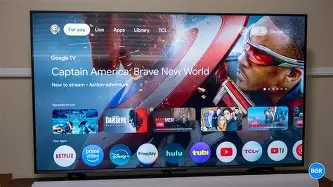
Sports and live TV
Sports fans want motion clarity and bright, punchy images. For daytime viewing in well‑lit family rooms, a TV with high sustained brightness and anti‑reflective coatings will outperform models tuned primarily for dark‑room cinema. The TCL QM6K’s balanced tuning can be advantageous for sports, while the Hisense U6N’s brightness helps display sunlit stadiums and highlights vividly.
Family rooms and everyday viewing
For households with mixed usage — background TV, streaming, occasional gaming — ease of use and a reliable smart platform often win. Firmware stability and app responsiveness become more important than marginal differences in peak HDR performance.
Buying guide: what to check before upgrading
Upgrading a TV is an investment. The following checklist helps buyers weigh whether replacing a Hisense U6N with a TCL QM6K will be worthwhile.
- Define the primary use case: Is the TV mainly for movies in a dark room, daytime streaming in a bright living room, or gaming? Match features to that use: contrast and dimming for movies; brightness and anti‑glare for bright rooms; HDMI 2.1/low lag for gaming.
- Verify exact model specs: Manufacturers often release several variations within a series. Confirm the panel/backlight type, zone count (for local dimming), HDR format support, and HDMI bandwidth on the specific SKU being considered.
- Check firmware and update cadence: A TV’s software maturity affects day‑to‑day experience. Look for recent firmware history and whether the brand provides ongoing updates for smart platform improvements and bug fixes.
- Test in the intended room: If possible, view both TVs under similar lighting conditions. Pay attention to bloom around bright objects, black crush, and color shifts from off‑axis viewing positions.
- Assess audio needs: If audio realism matters, factor in the cost of a soundbar or AV receiver. Many buyers keep internal TV speakers for casual TV and add a soundbar for movies and gaming.
- Consider calibration and professional setup: If color accuracy matters, check whether the TV offers calibration modes and whether local services exist to professionally calibrate the set.
- Look at warranty and support: Larger warranties or reliable customer support can sway a decision when two TVs feel similar in performance.
Practical upgrade scenarios
Here are a few scenarios where an upgrade makes sense — and where it might not.
- Upgrade makes sense: An owner with a Hisense U6N who observes persistent blooming on bright highlights, wants improved smart platform responsiveness, or needs additional HDMI 2.1 features for a next‑generation console may find value in switching to a TCL QM6K if that model addresses those specific gaps.
- Upgrade might not be necessary: If the U6N already delivers satisfying HDR, low input lag for gaming, and acceptable smart TV behavior, the marginal benefit of upgrading to a similarly positioned TCL model may be limited. Instead, investments in sound or room lighting control could produce more perceptible improvements.
- Save and wait: For buyers seeking reference‑level blacks or top‑end HDR tone mapping, waiting for a higher‑tier model or a well‑reviewed firmware update can be a better approach than upgrading between midrange models.
Final considerations and practical tips
Before making a decision, buyers should:
- Read multiple impartial reviews and watch calibration tests if color accuracy matters.
- Confirm the exact SKU and generation: larger screen sizes and newer model years can exhibit different panel behavior even within the same series name.
- Test HDMI features with the actual device (console, streaming box) when possible to verify 4K@120Hz and VRR performance.
- Balance expectations: a midrange upgrade often improves certain areas (e.g., brightness, smart UX) but rarely transforms the viewing experience into flagship territory.
Conclusion
Both the Hisense U6N (mini‑LED variant) and the TCL QM6K represent competitive choices in the midrange TV space. The decision to upgrade from one to the other hinges on a few practical factors: whether the owner needs better HDR peak brightness and tighter local dimming control, whether gaming features like HDMI 2.1 and low latency are a priority, and whether the smart platform and firmware stability of the target model address current frustrations.
For households that prioritize punchy HDR highlights and strong contrast in controlled viewing environments, a carefully implemented mini‑LED approach can deliver a clearer upgrade path. For those who value balanced out‑of‑the‑box picture, dependable smart features, and overall value, the TCL QM6K may be appealing. Ultimately, the best choice aligns the TV’s strengths with the buyer’s primary viewing habits and room conditions; testing the specific models in the intended environment — and verifying the SKU’s exact feature set — is the most reliable way to determine whether upgrading is worthwhile.