Don't Buy Until You Read This: Fujifilm X E5 vs Nisi V7 Filter Kit
The world of enthusiast photography often finds itself at a crossroads between the desire for compact portability and the technical necessity of professional-grade control. Today, few items represent these two poles as distinctly as the Fujifilm X-E5 and the NiSi V7 Filter Kit. While one is a highly anticipated evolution of a rangefinder-style mirrorless camera, the other is an essential precision tool for landscape and architectural photographers looking to master light. For the photographer planning their next equipment investment, understanding how these two pieces of gear interact—and whether you actually need both—is critical. This article breaks down the technical nuances, real-world applications, and the inherent trade-offs of investing in a high-end compact body versus a professional-tier filtration system.
At first glance, comparing a digital camera body to a filter kit might seem like comparing an engine to a set of tires. However, in the context of creating a cohesive photographic system, they are inextricably linked. The Fujifilm X-E5 represents the "brain" of the operation, capturing raw data with its sophisticated sensor and processor. The NiSi V7 Filter Kit represents the "vision," modifying the light before it ever hits the sensor. For many photographers moving into 2026, the question isn't just "which camera should I buy?" but rather "how should I allocate my budget to achieve better images?" Sometimes, the answer lies not in a more expensive sensor, but in better control over the exposure itself.
The Fujifilm X-E5: A Compact Powerhouse
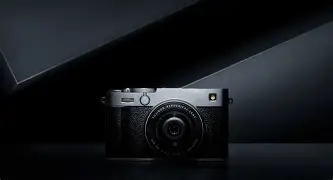
The Fujifilm X-E series has long been the "stealth" choice for street and travel photographers. With the X-E5, Fujifilm has refined the formula by incorporating the latest 40.2-megapixel X-Trans CMOS 5 HR sensor. This sensor is a significant leap forward, offering immense cropping potential and a level of detail previously reserved for the more expensive X-T and X-H flagships. The appeal of the X-E5 lies in its rangefinder aesthetic; it is slim, lightweight, and lacks the bulky pentaprism hump of traditional DSLRs or even the X-T5. This makes it an ideal companion for the photographer who wants to remain inconspicuous while capturing high-resolution files.
Furthermore, the X-E5 benefits from the latest AI-driven subject detection autofocus. Whether it is tracking a cyclist through a busy intersection or maintaining focus on a bird in flight, the processing power within this compact shell is formidable. For the buyer who prioritizes the "Fujifilm Experience"—specifically the tactile dial-based controls and the legendary Film Simulations—the X-E5 delivers in spades. It supports Reala ACE and other classic color profiles that allow photographers to achieve a finished "look" straight out of the camera. However, the move to such a high-resolution sensor brings its own challenges, namely the demand it places on lens quality and exposure precision.
In real-world use, the X-E5 excels in situations where speed and portability are paramount. However, when the sun begins to set or when a photographer faces the harsh dynamic range of a mountain sunset, the camera sensor alone can only do so much. Even the most advanced 14-bit RAW files can struggle with blown-out highlights in the sky while trying to maintain detail in deep shadows. This is where the technical limitations of digital sensors meet the physical solutions of traditional photography.
The NiSi V7 Filter Kit: Mastering the Light
While the digital sensor captures light, the NiSi V7 Filter Kit manages it. For those unfamiliar with the system, the V7 is a 100mm filter holder kit that allows photographers to slide in rectangular glass filters. It is widely considered the gold standard for landscape and long-exposure photography. The kit includes the refined V7 holder, a True Color Circular Polarizer (CPL), and various adapter rings. For the Fujifilm X-E5 user, this kit represents a transition from "taking" photos to "making" them.
The standout feature of the V7 is the integrated polarizer adjustment mechanism. Unlike cheap screw-on filters that can be difficult to rotate once a hood or another filter is attached, the V7 uses a gear-driven system that allows you to rotate the polarizer independently while your square filters remain fixed. This is crucial when trying to eliminate reflections on water or enhance the saturation of a blue sky without shifting your composition. For a high-resolution camera like the X-E5, the quality of the glass is non-negotiable. NiSi uses optical glass with nano-coatings that ensure zero color cast, which is a common failing of cheaper resin filters.
Using a filter kit is about physics. A Graduated Neutral Density (GND) filter allows a photographer to darken a bright sky while leaving the foreground untouched. A Solid Neutral Density (ND) filter allows for extremely long exposures in broad daylight, turning crashing waves into mist or moving clouds into ethereal streaks. No amount of post-processing or HDR "stacking" can perfectly replicate the natural transition of light provided by physical glass, especially when dealing with the high-frequency detail of the Fujifilm 40MP sensor.
Pros and Cons: Fujifilm X-E5
- Pro: High-Resolution Brilliance. The 40.2MP sensor provides incredible detail, allowing for significant cropping without losing print quality.
- Pro: Portability. The rangefinder-style body is one of the smallest APS-C cameras on the market, making it perfect for everyday carry.
- Pro: Film Simulations. Professional-level color science is available at the turn of a dial, saving hours of editing time.
- Pro: Enhanced AF. Deep-learning AI subject tracking makes it reliable for street, wildlife, and family photography.
- Con: Fixed Screen. Some users may find the tilting screen less versatile than a fully articulating one for vlogging or odd angles.
- Con: Battery Life. The small body necessitates a smaller battery, which can drain quickly during heavy 4K video use or long shooting days.
Pros and Cons: NiSi V7 Filter Kit
- Pro: Optical Purity. High-quality glass ensures that the 40MP resolution of your camera isn't softened by poor filters.
- Pro: Integrated CPL. The True Color Circular Polarizer is easy to use and provides natural color without the yellow tint found in older models.
- Pro: Versatility. Can be used across multiple lenses with different thread sizes thanks to the included adapter rings (67mm, 72mm, 77mm, 82mm).
- Pro: Build Quality. Constructed from aviation-grade aluminum, it is durable enough for harsh outdoor environments.
- Con: Learning Curve. Square filter systems require a slower, more methodical approach to photography.
- Con: Bulk. Carrying a 100mm filter kit adds significant volume to a camera bag, which might contradict the "compact" ethos of an X-E5.
Technical Specification Comparison
To better understand how these two components serve the photographer, it is helpful to look at their technical specifications side-by-side. While they are different categories of gear, their specifications dictate their compatibility and performance on the field.
Shop the latest Cameras & Photography picks on Amazon.
Browse Now →| Feature | Fujifilm X-E5 Camera | NiSi V7 Filter Kit |
|---|---|---|
| Primary Function | Image Capture and Processing | Light Modification and Control |
| Sensor/Material | 40.2MP X-Trans CMOS 5 HR | Optical Glass / Aluminum Holder |
| Mount/Attachment | Fujifilm X-Mount | 82mm Main Ring (Adapters included) |
| Weight | Approx. 360g (with battery) | Approx. 450g (kit with case) |
| Best Case Use | Street, Travel, Candid Portraiture | Landscape, Seascapes, Architecture |
| Key Tech | X-Processor 5, AI Autofocus | True Color CPL, 100mm System |
Real-World Analysis: The Synergy of Gear
When you combine a precision sensor like the one in the X-E5 with a professional filter system like the NiSi V7, you are essentially building a mini-medium-format rig. The higher the resolution of your camera, the more apparent the flaws in your exposure become. For instance, if you are shooting a coastal scene in Cornwall or the Oregon coast, the X-E5 will capture every nuance of the texture in the rocks. However, without a NiSi ND filter, your water will likely be "frozen" in a messy, distracting way because your shutter speed will be too fast. By adding a 6-stop or 10-stop ND filter from the V7 kit, you can extend that exposure to 30 seconds, smoothing the water into a silk-like texture that emphasizes the solid forms of the landscape.
Buyers often ask: "Can't I just use software to mimic these effects?" The answer is nuanced. While you can use "Digital ND" features in some cameras or stack multiple images in Photoshop to simulate a long exposure, the results often lack the organic transition of a physical filter. Furthermore, a polarizer cannot be authentically replicated in post-production. A polarizer physically removes reflections from surfaces like wet leaves or the surface of a lake, revealing the colors beneath. Digital software can only darken those reflections; it cannot see through them. For the X-E5 user who wants to maximize the potential of those 40 megapixels, the NiSi V7 is not an optional accessory; it is a fundamental part of the optical path.
Another factor for buyers to consider is the lens choice. The Fujifilm X-E5 is often paired with small "Fujicron" primes like the 23mm f/2 or 35mm f/2. These lenses have small filter threads (typically 43mm or 49mm). Using a large 100mm filter system like the NiSi V7 on such small lenses might seem like overkill. However, the advantage of the NiSi system is its future-proofing. If you eventually purchase the XF 10-24mm f/4 or the XF 16-55mm f/2.8—lenses with much larger front elements—the NiSi V7 will fit them perfectly. Investing in the V7 kit ensures you don't have to buy new filters every time you upgrade your glass.
Buying Guide: Which Investment Should You Prioritize?
Choosing between upgrading your camera body or investing in a high-end filter system depends heavily on your current portfolio and your photographic goals. Before you make a purchase, consider the following scenarios based on typical buyer behavior in 2026.
Scenario A: The "Street and Lifestyle" Photographer
If your primary focus is capturing people, urban environments, and spontaneous moments, the Fujifilm X-E5 should be your priority. The speed of the autofocus systems and the portability of the body will allow you to get shots you might otherwise miss. A large filter kit like the NiSi V7 would likely stay in your bag, as it is too cumbersome for the fast-paced nature of street photography. In this case, the resolution and color science of the X-E5 provide the most immediate "ROI" (Return on Investment).
Scenario B: The "Dedicated Landscaper"
If you already own an older Fujifilm body (like the X-E3 or X-T30) and your goal is to produce breathtaking, wall-sized landscape prints, you might actually benefit more from the NiSi V7 Filter Kit first. While the X-E5 offers more pixels, the V7 kit offers better pixels. By controlling the light at the source, you ensure that your existing sensor is performing at its absolute peak. The addition of long exposure capabilities and polarization will transform your portfolio more dramatically than a simple bump in resolution ever could.
Scenario C: The "Balanced Traveler"
For the traveler who does a bit of everything, the X-E5 is the logical starting point. However, you must be aware that the 40MP sensor is unforgiving. To truly justify the cost of the X-E5, you will eventually want to add high-quality glass and, by extension, a filter system like the NiSi V7. If you are buying for a specific once-in-a-lifetime trip to the Dolomites or the Japanese Alps, trying to fit both into your budget is the ideal path, as they complement each other's strengths perfectly.
What Buyers Care About: Durability and Longevity
When spending significant money on camera gear, durability is a top concern. The Fujifilm X-E5, while beautifully designed, is not fully weather-sealed. This means that if you are using it in the rain or near sea spray, you need to be cautious. This is where the NiSi V7 kit actually adds a layer of protection. Because the filter holder and the filters themselves are made of robust glass and metal, they can act as a shield for your lens's front element. Furthermore, the NiSi filters are designed to be easy to clean; sea salt and fingerprints wipe away much more easily from their nano-coated surfaces than from the delicate coatings of an expensive lens.
Longevity is another critical factor. Digital camera bodies are notoriously ephemeral; an X-E5 might be superseded by an X-E6 in three or four years. However, a high-quality filter holder like the NiSi V7 can last a lifetime. Optical glass technology doesn't "age" in the same way sensors do. A 10-stop ND filter you buy today will be just as useful on a camera released in 2035 as it is on the X-E5 today. When viewed through this lens, the NiSi kit represents a more "permanent" investment in your craft.
Shop the latest Cameras & Photography picks on Amazon.
See Deals →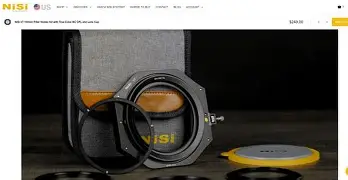
Practical Tips for Using the X-E5 with the NiSi V7
If you decide to pair these two items, there are a few practical considerations to ensure a smooth workflow. First, because the X-E5 is a small camera, using a large 100mm filter holder can make the setup feel front-heavy. Using a small grip or a L-bracket on the X-E5 can significantly improve handling when the filter kit is attached. This provides a better counterweight and makes it easier to adjust the filters without vibrating the camera.
Second, take advantage of the X-E5's electronic viewfinder (EVF). One of the greatest benefits of mirrorless cameras is that you can see the effect of your filters in real-time. When you rotate the NiSi CPL, you will see the reflections disappear in the viewfinder. When you slide in a 10-stop ND filter, the camera will automatically brighten the preview so you can still compose your shot. This eliminates the "guesswork" that used to plague DSLR photographers using heavy filtration. It makes the NiSi V7 much more intuitive for beginners and much faster for professionals.
Finally, remember to turn off Image Stabilization (IBIS or OIS) when using the X-E5 on a tripod with the NiSi V7. When shooting long exposures—the primary use case for the V7 kit—the stabilization system can sometimes try to "correct" for vibrations that aren't there, resulting in a slightly blurry image. By disabling stabilization and using a remote shutter release or the camera's self-timer, you ensure that every one of those 40 million pixels is tack-sharp.
The Verdict: A Synergistic Relationship
The Fujifilm X-E5 and the NiSi V7 Filter Kit serve different masteries but share a common goal: the pursuit of image quality. The X-E5 is an triumph of miniaturization, packing some of the world's best imaging technology into a body that fits in a jacket pocket. It is the perfect tool for the photographer who wants to be ready for anything, from a fleeting expression on a city street to a stunning vista at the end of a long hike.
The NiSi V7 Filter Kit is a triumph of optical engineering. It is a reminder that photography is, at its heart, the writing of light. By giving the photographer the tools to physically manipulate that light—slowing it down, polarizing it, and balancing its intensity—it elevates the act of image creation. It turns the X-E5 from a high-tech recording device into a tool for artistic expression.
Ultimately, do not buy the Fujifilm X-E5 expecting it to solve all your exposure problems through software alone. And do not buy the NiSi V7 kit if you aren't prepared to slow down and embrace a more contemplative style of photography. When used together, however, they represent one of the most powerful and portable professional setups available to the modern photographer. Whether you are chasing the golden hour or documenting the grit of the city, understanding the roles of these two pieces of equipment is the first step toward better photography.
For the prospective buyer, the choice comes down to your current "bottleneck." If you are limited by your camera's autofocus and resolution, the X-E5 is your answer. If you are limited by blown-out skies and a lack of creative shutter speed control, the NiSi V7 is the key. In either case, both products represent the pinnacle of their respective categories and are worthy of a place in any serious photographer's kit bag.