Biggest Miofive Mirror 1 Dash Cam Buying Mistakes (And How to Avoid Them)
The Miofive Mirror 1 dash cam is a mirror-style dash camera that appeals to buyers looking to combine a rearview-mirror replacement with continuous video recording, parking protection, and a cleaner cabin installation than a traditional suction-cup camera. As mirror dash cams become more common, so do mistakes buyers make when choosing, installing, and using them. This article explains the most common pitfalls people encounter with the Miofive Mirror 1 specifically (and mirror dash cams generally), how those mistakes affect real-world use, and concrete steps to avoid them.
Introduction: Who the Mirror 1 is for — and who should be cautious
The Miofive Mirror 1 is best suited to drivers who want an integrated look, a wide field of view, and a visible screen that does not obstruct the windshield. Typical users include rideshare drivers who need continuous front-and-rear recording, families who want discreet monitoring, and commuters who want parking surveillance. Fleet managers and owners of older vehicles who prefer a single-device installation also find mirror dash cams attractive.
That said, buyers who prioritize the absolute highest video resolution, the lightest possible rear camera, or the smallest installation footprint may want to compare other designs. Understanding common mistakes—and how they impact day-to-day use—helps buyers decide whether the Mirror 1 is the right tool for their needs or whether another style of dash cam is a better fit.
Detailed product analysis: What the Miofive Mirror 1 delivers and where it can surprise buyers
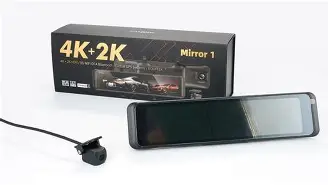
Mirror dash cams like the Mirror 1 combine a reflective rearview mirror surface with a built-in display and camera system. The primary benefits are an unobtrusive look and a larger screen for playback and menus. In practice the Mirror 1 typically offers:
- Two-channel recording (front and rear) so both forward-facing incidents and rear collisions are captured.
- Loop recording and G-sensor to secure footage when a collision is detected, preventing overwrites.
- Parking mode that records events while the vehicle is parked (often via motion detection or impact triggers).
- Integrated display that acts as a mirror when idle and shows live or recorded video when activated.
- App or Wi‑Fi connectivity for clip download and settings adjustments without pulling the microSD card.
These capabilities are compelling, but they come with trade-offs that commonly surprise buyers:
1. Field of view vs. image distortion
To capture as much of the road as possible, mirror dash cams use wide-angle lenses. While the Mirror 1 captures a broad swath in front of the vehicle, very wide lenses can produce barrel distortion at the edges. For insurance evidence and license plate legibility at longer ranges, distortion and digital cropping can matter. Buyers expecting razor‑sharp, telephoto-style identification of distant plates may be disappointed.
2. Screen size, brightness, and reflective surface
Because the device doubles as a mirror, the display must be bright enough to show a clear image when needed but dimmable so it does not blind at night. Reflection management varies between models. In bright daylight the display may be faint; at night, reflections from interior lights or passenger devices can show up unless the screen and mirror surface are well balanced.
3. Power and parking mode limitations
Parking mode is a major selling point, but it often requires either hardwiring to the vehicle’s battery or a separate low-current constant power connection. Buyers who only use the cigarette-lighter adapter will not have parking protection once the ignition is off. Additionally, battery-draining behaviors and thermal cutouts may limit parking recordings during extreme temperatures.
4. Installation complexity and mirror compatibility
Mirror dash cams are designed to fit over or replace the factory mirror. The Mirror 1 may fit most vehicles, but differences in mirror size, mounting geometry, or integrated sensors (rain/light sensors, auto-dimming connectors) can complicate installation. Drivers who want a factory-like finish may need professional installation.
5. Storage management and microSD choices
Continuous dual-channel recording fills storage quickly. Buyers often buy cheap microSD cards that are not rated for continuous dash cam workloads and experience file corruption. Using a high-endurance card and selecting the right capacity are critical to reliable operation.
Discover deals on Electronics — updated daily.
Browse Now →Real-world use cases and buyer priorities
Understanding how different users interact with the Mirror 1 helps clarify which features matter most and where mistakes become costly.
- Rideshare drivers: need reliable front-and-rear capture, low-light performance for late-night trips, automatic incident saving, and easy access to footage for disputes. Parking mode is less important than continuous recording while driving.
- Commuters: prioritize unobtrusive installation, clear daytime footage, and occasional playback. They may not need constant cloud uploads but will want simple SD-card management.
- Families and parents: often use dash cams to monitor teen drivers or record family trips. Long recording sessions and easy playback are valued more than maximum resolution.
- Fleet managers: want scalable installation, centralized footage retrieval (often via Wi‑Fi or cellular gateways), and robust power management. They are sensitive to maintenance costs like replacing microSD cards.
Pros & Cons
- Pros
- Integrated mirror design keeps the cabin tidy and avoids windshield obstructions.
- Large screen makes menu navigation and playback easier than on tiny camera units.
- Dual-channel recording covers both front and rear views simultaneously.
- Parking mode options can capture hit-and-run incidents when set up with proper power.
- Wi‑Fi or app control simplifies clip transfer for most users.
- Cons
- Fitment and installation can be more complicated than plug-and-play dash cams.
- Wide-angle lenses may distort edges and reduce long-range detail.
- Parking mode often requires hardwiring or an additional power kit to work when the car is off.
- Screen brightness and reflections can be an issue in some vehicles or lighting conditions.
- Cheaper microSD cards and improper format/maintenance lead to corrupted recordings.
Quick comparison: Miofive Mirror 1 vs. typical alternatives
| Feature | Miofive Mirror 1 (mirror-style) | Traditional compact dash cam | Dedicated 4K standalone |
|---|---|---|---|
| Installation | Clip-over or replacement of existing mirror; may need hardwire | Windshield or dashboard mount; usually simple | Mount or hardwire; varies by model |
| Screen | Large integrated mirror/display | Small integrated display or none | Some have moderate screens; many rely on app |
| Dual-channel | Typically yes (front + rear) | Often single channel unless paired with rear camera kit | Available as dual channel in higher-end kits |
| Parking mode | Available, often requires hardwire | Available on many models with hardwire | Robust parking features on high-end models |
| Discreteness | Very discreet (blends with mirror) | More visible on windshield or dash | Varies—some are discrete, others are prominent |
| Video detail | Good for general capture; lens trade-offs | Varies by camera; many offer excellent daytime clarity | Best detail; 4K models capture fine plate detail at distance |
Biggest buying mistakes and how to avoid them
Mistake 1: Buying without checking mirror fit and vehicle compatibility
Why it matters: Mirror dash cams must physically fit over or replace the original mirror. A mismatch can block sensors, produce vibration, or look visibly out of place.
How to avoid: Measure the current mirror and verify the Mirror 1’s mounting method. Check whether the vehicle has sensors or camera assemblies near the mirror that might interfere. If in doubt, consult installation guides or choose professional fitting.
Mistake 2: Expecting parking protection from a cigarette-lighter power supply
Why it matters: Most vehicles cut power to the lighter socket when the ignition is off. Without a constant-power connection, parking mode won’t function.
How to avoid: Decide whether you need parking mode. If yes, plan to hardwire to a constant battery feed with a fused hardwire kit or use a dedicated battery pack designed for dash cams. Consider models with low-power draw and thermal protections for hot climates.
Mistake 3: Using a low-quality microSD card
Why it matters: Dash cams demand sustained write performance. Generic or consumer-grade cards can fail, corrupt files, or wear out quickly.
How to avoid: Buy a high-endurance microSD card from a reputable manufacturer and choose a capacity that matches expected recording lengths (32–256 GB depending on needs). Format the card in the dash cam after installation and periodically replace it per the manufacturer’s lifecycle recommendations.
Mistake 4: Ignoring night-time and weather performance
Why it matters: Many collisions and parking incidents occur at night or in rain/snow. A dash cam with poor low-light dynamic range or inadequate rear-camera placement won’t capture useful evidence.
How to avoid: Read real-world reviews focusing on low-light performance and check sample footage where possible. Consider whether supplemental lighting, camera repositioning, or a different lens configuration will improve night capture.
Shop the latest Electronics picks on Amazon.
Shop Amazon →Mistake 5: Assuming firmware updates and app features are mature
Why it matters: Mirror dash cams often rely on firmware and mobile apps for features like Wi‑Fi transfer, GPS tagging, and advanced settings. Early firmware can contain bugs affecting stability or file integrity.
How to avoid: Verify the vendor’s track record for firmware updates. After purchase, check for firmware updates and test the app’s record retrieval and settings before long trips. Back up important clips immediately to a separate storage device.
Buying guide: Key questions to ask before purchasing the Mirror 1
Use this checklist to match the Mirror 1’s capabilities to real needs.
- Will it fit? Measure your current mirror and check whether the Mirror 1 mounts over or replaces it. Confirm compatibility with built-in mirrors that have sensors or cabling.
- Do you need parking mode? If yes, plan out hardwiring and whether the vehicle battery and climate will support sustained surveillance.
- What resolution and frame rate matter? For general evidence capture, 1080p at 30–60 fps is typically sufficient. For license-plate-level detail at distance, higher resolutions can help—but expect larger files and higher storage needs.
- How will you store footage? Choose a high-endurance microSD card and decide on capacity based on loop length, channels, and resolution. Consider routine backups or a workflow for important clips.
- Is app connectivity important? If the user wants quick clip transfer, check whether the app is reliable and whether Wi‑Fi transfer speed is adequate for large files.
- What warranties and support are available? Dash cams operate in a harsh environment. Confirm warranty terms, support contact channels, and whether firmware updates are issued regularly.
- How to test after installation? After installing, perform daytime and nighttime test drives, simulate impacts if safe (or tap the vehicle gently) to confirm event-locking works, and verify parking mode operation.
Practical installation and maintenance tips
- Professional hardwiring: For parking mode, a professional install ensures fused connections, correct constant/ignition wiring, and minimal risk to the vehicle electrical system.
- Mounting vibration: Use anti-vibration pads if the mirror mount is loose—this reduces blur and increases the lifespan of mechanical components.
- Regular SD-card hygiene: Format the microSD card in the device every few weeks or months (depending on usage) and replace cards annually for heavy users like rideshare drivers.
- Firmware discipline: Only update firmware from official channels and follow update instructions exactly. Keep a backup of critical footage before applying major updates.
- Clip handling: After an incident, immediately copy and archive the locked file to multiple locations (phone, cloud, computer) to avoid accidental overwriting.
When the Mirror 1 is a smart choice — and when to consider alternatives
The Mirror 1 is a smart choice for drivers who value a factory-integrated look, want easy playback in the car, and need both front and rear perspectives without a two-piece visible camera setup. It also suits vehicles where windshield space is limited or when multiple occupants prefer the cleaner mirror aesthetic.
Consider alternatives when:
- Maximum video detail and long-range plate capture are paramount (look for high-end 4K standalone units).
- Professional fleet management requires centralized data transfer and cellular connectivity out of the box (enterprise telematics solutions may be better).
- The vehicle’s mirror geometry or built-in sensors make fitting the Mirror 1 impractical or risky.
Conclusion
The Miofive Mirror 1 dash cam delivers the core advantages of mirror-style dash cameras: a clean installation, a large integrated display, and front-and-rear coverage. The most common buying mistakes—ignoring fitment, assuming parking protection without a hardwired power source, using inadequate microSD cards, and underestimating night or long-range capture requirements—are avoidable with a little preparation.
Buyers who match the Mirror 1’s strengths to their real-world needs, invest in quality storage and proper power setup, and validate performance with test drives will find it a practical, discrete solution for everyday recording and incident protection. For those who need the absolute highest resolution, enterprise features, or the smallest possible camera footprint, comparing the Mirror 1 to dedicated compact or 4K units remains a sensible next step.