5 Hidden Features of the Seenda Mou 302 Vertical Wireless Mouse You Must Know About
Introduction
The Seenda Mou 302 Vertical Wireless Mouse has quietly gained traction among users who prioritize comfort and practicality over flashy branding. On the surface it looks like many other vertical ergonomic mice: a sculpted right‑hand design, a few extra buttons, and wireless connectivity. But within that modest shell are several underappreciated features that can materially improve day‑to‑day productivity, comfort during long sessions, and multi‑device workflows. This article unpacks five of those hidden features, explains why they matter in real‑world use, and offers guidance for buyers who are weighing the Mou 302 against competing options.
Quick overview: what buyers typically care about
People shopping for a vertical mouse usually want the same core things: reliable connectivity, comfortable ergonomics that reduce wrist pronation, reasonable tracking precision for office tasks and light creative work, long battery life or easy recharging, and software or button flexibility to adapt to different workflows. Secondary concerns include device compatibility (Windows, macOS, Linux, tablets), how easy it is to move between devices, and whether the mouse hides its extras without adding complexity. The Seenda Mou 302 addresses many of these points — and hides a few clever touches that are worth highlighting.
Feature deep dive: the 5 hidden features
1. Dual‑mode connectivity that simplifies multi‑device switching
One of the most useful but easy‑to‑miss aspects of the Mou 302 is its dual wireless modes. Beyond simple plug‑and‑play with the bundled USB receiver, it typically supports Bluetooth pairing as a second mode. In practical terms this means a user can keep the USB dongle plugged into a desktop machine while pairing the same mouse to a laptop or tablet via Bluetooth. This setup makes short hops between devices seamless — no replugging, no swapping batteries between mice — and it suits hybrid work patterns where one person uses a laptop for mobility and a desktop for heavier tasks.
Real‑world tip: when switching between devices frequently, set the primary machine to the dongle and reserve Bluetooth for the secondary device to avoid accidental pair drops and to retain lower latency for the main workflow.
2. On‑the‑fly DPI switching that’s more flexible than it seems
Most users assume DPI buttons are only for gamers. In the Mou 302, an often‑overlooked DPI button becomes a productivity tool. The on‑the‑fly DPI toggle lets users cycle through sensitivity presets quickly — useful when moving between long spreadsheet scrolls, precise photo editing, and web browsing. The ability to step down to a lower DPI for pixel‑accurate adjustments and jump to higher DPI for sweeping cursor movements reduces the frequent wrist repositioning that causes fatigue.
Practical use case: graphic designers who work in layered editing applications can set a low DPI for fine brushwork and a higher DPI for navigation — all without changing software settings.
3. An internal receiver storage and travel‑friendly design
Seenda’s Mou 302 often includes a cleverly hidden detail: the 2.4GHz USB receiver stows inside the mouse when not in use. This small design choice becomes a major convenience when commuting or packing gear for a meeting. It prevents losing the receiver and reduces the risk of damage during transport. For users who frequently move between home, office, and co‑working spaces, that little compartment increases the product’s longevity and reduces friction.
Real‑world benefit: consultants and sales professionals who travel light appreciate that the receiver is secured and ready whenever they plug into a client workstation — no frantic searching in a bag.
4. Quiet click profile and tactile thumb rest for long sessions
Noise and comfort matter in shared environments. The Mou 302’s buttons tend toward a quiet click profile, which keeps open‑plan offices and video calls quieter. Additionally, the sculpted thumb rest and vertical tilt of the body reduce forearm pronation, which lessens strain over extended use. These ergonomic characteristics are not flashy but are directly connected to reduced discomfort and fewer micro‑breaks during heavy typing or editing sessions.
What buyers notice: people who switch from a flat mouse to a vertical model frequently report less wrist ache after a week of continued use — the quiet clicks help maintain concentration in shared spaces too.
Shop the latest Laptops & Computers picks on Amazon.
See Deals →5. Strong plug‑and‑play compatibility plus driver‑friendly button remapping
Out of the box, the Mou 302 is designed to work without drivers on major platforms: Windows, macOS, and many Linux distributions accept it as a standard HID device. That plug‑and‑play compatibility is a hidden convenience for IT admins and users who can’t or won’t install extra software. For those who want to customize, Seenda and third‑party utilities allow remapping of the thumb buttons and DPI cycles. That balance — immediate usability with an upgrade path for customization — makes the mouse accessible for non‑technical users while still flexible for power users.
Scenario: an office admin can deploy the mouse fleet without pushing extra software, while a power user can map the extra button to a frequently used macro or application switcher.
Detailed product analysis
Comfort and ergonomics: The Mou 302’s vertical orientation aligns the hand into a handshake position. That reduces pronation and the associated tendon strain compared to traditional flat mice. The shape typically supports a palm‑rest posture that distributes pressure across the hand rather than concentrating it on the wrist. Size matters: users with very large or very small hands should test fit where possible; vertical mice have less standard sizing than flat mice.
Tracking and performance: For office productivity, the Mou 302 delivers adequate tracking for pointer work and light creative tasks. Its optical sensor offers reliable movement on most desk surfaces; some users still prefer a mouse pad for consistent tracking. The DPI presets provide enough range for most tasks, though users who require gaming‑grade responsiveness and very high polling rates should consider dedicated gaming models.
Battery and power management: The Mou 302 balances battery life with convenience. Many units either use replaceable AA batteries or an internal rechargeable cell, and an on/off switch plus an auto‑sleep function stretches usable life between charges or battery swaps. The quick receiver storage and power options make it easy to maintain for road warriors and desk‑bound users alike.
Build quality and materials: For the price category the Mou 302 sits in, build quality tends to be solid. Buttons feel responsive, plastic surfaces resist minor abrasion, and seams are tight. It is not a luxury metal‑chassis device, but users generally find it durable enough for daily office use.
Pros & Cons
- Pros
- Ergonomic relief: Vertical shape helps reduce wrist pronation and related discomfort.
- Dual connectivity: Both USB dongle and Bluetooth are available for multi‑device setups.
- On‑the‑fly DPI: Quick sensitivity switching for mixed tasks (editing, browsing, navigation).
- Receiver storage: Built‑in compartment reduces lost dongles when traveling.
- Quiet operation: Subdued clicks suitable for shared or quiet environments.
- Cons
- Learning curve: New users may need time to adapt from a flat mouse.
- Size fit: May not suit very small or very large hands; try before buying when possible.
- Not optimized for competitive gaming: Polling rate and low latency aren’t gaming‑grade compared to dedicated gaming mice.
- Limited advanced software: Customization exists but may not be as extensive as premium brands’ suites.
How the Seenda Mou 302 compares to similar vertical mice
| Model | Target user | Connectivity | Customization | Best for |
|---|---|---|---|---|
| Seenda Mou 302 | Office users, hybrid workers | USB dongle + Bluetooth | Basic button remap + DPI presets | Ergonomic comfort, multi‑device use |
| Logitech MX Vertical | Power users, professionals | USB + Bluetooth + Unifying | Advanced via Logitech Options | High customization and premium comfort |
| Anker Vertical Ergonomic Mouse | Budget ergonomic shoppers | Bluetooth or USB (model dependent) | Minimal; plug‑and‑play | Affordable entry-level ergonomics |
This comparison highlights where the Mou 302 sits in the market: it is a pragmatic middle ground that emphasizes ergonomics and convenience for everyday productivity without pushing into premium customization or gaming performance.
Buying guide: what to look for when choosing a vertical mouse
Vertical mice are not one‑size‑fits‑all. The following checklist helps buyers avoid common pitfalls and choose a model that fits their needs.
Handedness and grip style
Confirm whether the mouse is right‑hand only or ambidextrous. Vertical mice are typically handed; left‑handed users will need to look for dedicated left‑hand models. Also identify your grip: fingertip, claw, or palm. The Mou 302 generally favors a palm or relaxed claw grip due to its contour.
Looking for the best Laptops & Computers deals on Amazon?
Browse Now →Connectivity needs
Decide whether single or dual connectivity matters. If the user swaps between laptop and desktop often, a model with both Bluetooth and a USB dongle (like the Mou 302) is preferable. For single‑device use, a Bluetooth‑only mouse may suffice and reduce USB clutter.
Sensor and DPI range
Check the available DPI presets and whether the mouse supports on‑the‑fly switching. For office work, a modest range with stable low‑DPI performance is more valuable than an extreme top end. Those doing precision photo editing should ensure the mouse can be set to a suitably low sensitivity.
Battery vs rechargeable
Decide between replaceable batteries and internal rechargeable cells. Rechargeable models reduce waste and the hassle of buying batteries but may force downtime during charging. Replaceable batteries offer quick swaps in remote settings. Consider whether the mouse supports power saving modes.
Software and customization
Check whether the manufacturer provides a configuration utility and whether third‑party tools support further remapping on your OS. Businesses that standardize peripherals may prefer widely supported plug‑and‑play models with minimal required software.
Try before you buy
Whenever possible, test the mouse for feel and fit. Many electronics retailers have display units; otherwise, check return policies so the mouse can be trialed at home. Ergonomic benefits are highly individual — what reduces one person’s discomfort may be suboptimal for another.
Practical setup tips and usage scenarios
Optimize the experience with a few simple steps:
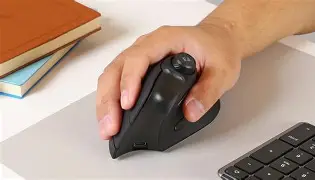
- Pair the USB dongle to the primary workstation and Bluetooth to a secondary device for frictionless switching.
- Customize the thumb button to act as an application switcher or a forward/back control in browsers to speed navigation.
- Use the DPI toggle to create distinct workflows: DPI 1 for editing and DPI 2 or 3 for document navigation.
- Pair the mouse with a soft‑fabric mouse pad if tracking feels inconsistent on a glossy desk surface.
- Allow a one‑week break‑in period: muscle memory will adapt to the vertical posture and comfort gains typically show up after repeated use.
Conclusion
The Seenda Mou 302 Vertical Wireless Mouse is a quietly capable option for users seeking ergonomic relief without complexity. Its dual connectivity, on‑the‑fly DPI switching, receiver storage, quiet clicks, and combination of plug‑and‑play compatibility with optional remapping make it particularly well‑suited to hybrid workers, frequent travelers, and office users who want comfort and convenience. While it is not a specialist gaming device or a premium, highly customizable flagship, it strikes a sensible balance for the majority of productivity workflows. For anyone considering a move away from flat mice to reduce wrist strain, the Mou 302 is worth trying — and the five hidden features described here help explain why it performs well in everyday use.